

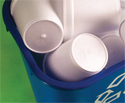
 So…what if a community (or a school, restaurant, supermarket, business) wants the advantages of plastic foodservice packaging… and to recycle more of its waste? Many valiant efforts over the past few decades have demonstrated what works and what doesn’t when it comes to recycling foodservice packaging in the U.S.
Note: The recycling activities described below are predominately about recycling foam foodservice packaging, nearly all of which is made from one type of plastic: polystyrene.
Looking for ways to recycle foam foodservice packaging? Start here: HomeforFoam.com.
RECYCLING MAP
https://batchgeo.com/map/EPSRecyclingMap is an interactive website that allows Americans and Canadians to search for local recycling programs that collect protective foam packaging and foam food packaging. The site also identifies foam packaging “mail back” programs for areas where local recycling does not exist.
View EPS Recycling Map in a full screen map
RECYCLING PROGRAMS
Today there are many innovative recycling programs for foam foodservice packaging—some of which were initiated by school kids!
Here are some examples:
CURBSIDE RECYCLING:
- California curbside: Dozens of California cities, including our nation’s second largest city, Los Angeles, and the state capitol, Sacramento, collect foam packaging in curbside recycling programs. These recycling programs accept foam foodservice packaging, such as coffee cups and take-out containers—residents simply clean and toss them in the blue bin with other recyclables.
- Denver curbside: In late 2015, a recycling facility in the Denver area began recycling foam foodservice and protective packaging that is collected in curbside bins.
- Future: Cities interested in learning more about including foam foodservice packaging in recycling programs, please click here.
- Case Studies: Read about two communities in California that are recycling foam polystyrene foodservice packaging in their curbside recycling program. Please click here for case studies.
Note: For locations of curbside recycling programs in Canada that include foam foodservice packaging, please click here.
DROP-OFF RECYCLING
- Multiple locations: There is a growing number of locations in the U.S. where people can drop-off foam foodservice packaging for recycling. Find them here and here.
- San Joaquin County, California: Read about a community that has found a way to “close the loop” on foam foodservice packaging recycling.
- Case Study: Read about a drop-off recycling program for foam packaging in Madison, WI. Please click here.
SCHOOLS
- Lunch trays: Students recycle foam lunch trays at schools in numerous states, including California, Illinois, Michigan, Pennsylvania, and Texas. This video shows how.
- Arlington Heights, Illinois: Learn how students and staff launched a foam lunch tray recycling program in this Chicago suburb.
- Torrance, California: Read how students created a recycling program for their foam lunch trays and other plastic recyclables.
- More info: Starting school recycling programs.
RESTAURANTS
- Foam cups: A well-known quick service restaurant has launched a foam cup recycling program. Watch the video.
- Advertising: In some California communities that recycle foam foodservice packaging at curbside, restaurants post signs encouraging customers to participate.
GROCERY STORES
- Some grocery stores take back foam egg cartons and similar products, such as clean plastic foam food trays and foodservice products, for recycling. (Check your local grocery store for the recycling bin.)
COMMERCIAL
- The CARE (Cups Are Recyclable) Program enables commercial facilities with foodservice operations to collect foam foodservice packaging for recycling.
PUBLIC SPACES
- Mammoth Cave National Park, Kentucky: Staffers at this park collect foam packaging for recycling, including cups, plates, take-out containers, and egg cartons.
RECYCLING PROCESS
So how do these recycling programs work? And what happens to the recycled plastic?
Recycling this stuff is fairly simple, but not always easy. Because foam packaging is more than 90% air, it typically is collected (usually clean) at centralized facilities to make its transport economical. To get more foam on a truck, most programs then “densify” it prior to shipping it for recycling.
The densified foam plastic then is simply ground up, heated and recast into plastic pellets. These pellets are sold to companies that make products such as “green building” construction materials, consumer goods, egg cartons, plastic packaging and other products.
For a more detailed description of the recycling process, check out the Foam Recycling Coalition.
NON-FOODSERVICE PACKAGING RECYCLING
What about recycling foam packaging that’s not used for foodservice? Recycling of protective packaging made from EPS (expanded polystyrene) continues to rise—to a recycling rate of 34 percent, according to the EPS Industry Alliance.
MORE INFO/VIDEOS
Check out these videos that demonstrate various aspects of foam packaging recycling:
- Check out this video about growing opportunities to recycle polystyrene.
- Watch as the “Waste Sleuth” investigates the recycling process from foam cup to a new product.
- Watch foam packaging get ground up and turned back into “raw” plastic.
- Check out Walmart’s polystyrene foam recycling program.
- Watch what our friends in Canada are doing to increase recycling of foam packaging.
Want to look further into plastics recycling? Check out these sites from the American Chemistry Council’s Plastics Division that help explain various types of plastics recycling programs.